.svg)





If your dog hears one firework from three postal codes away and is already wedged behind the toilet, welcome. You’re among friends.
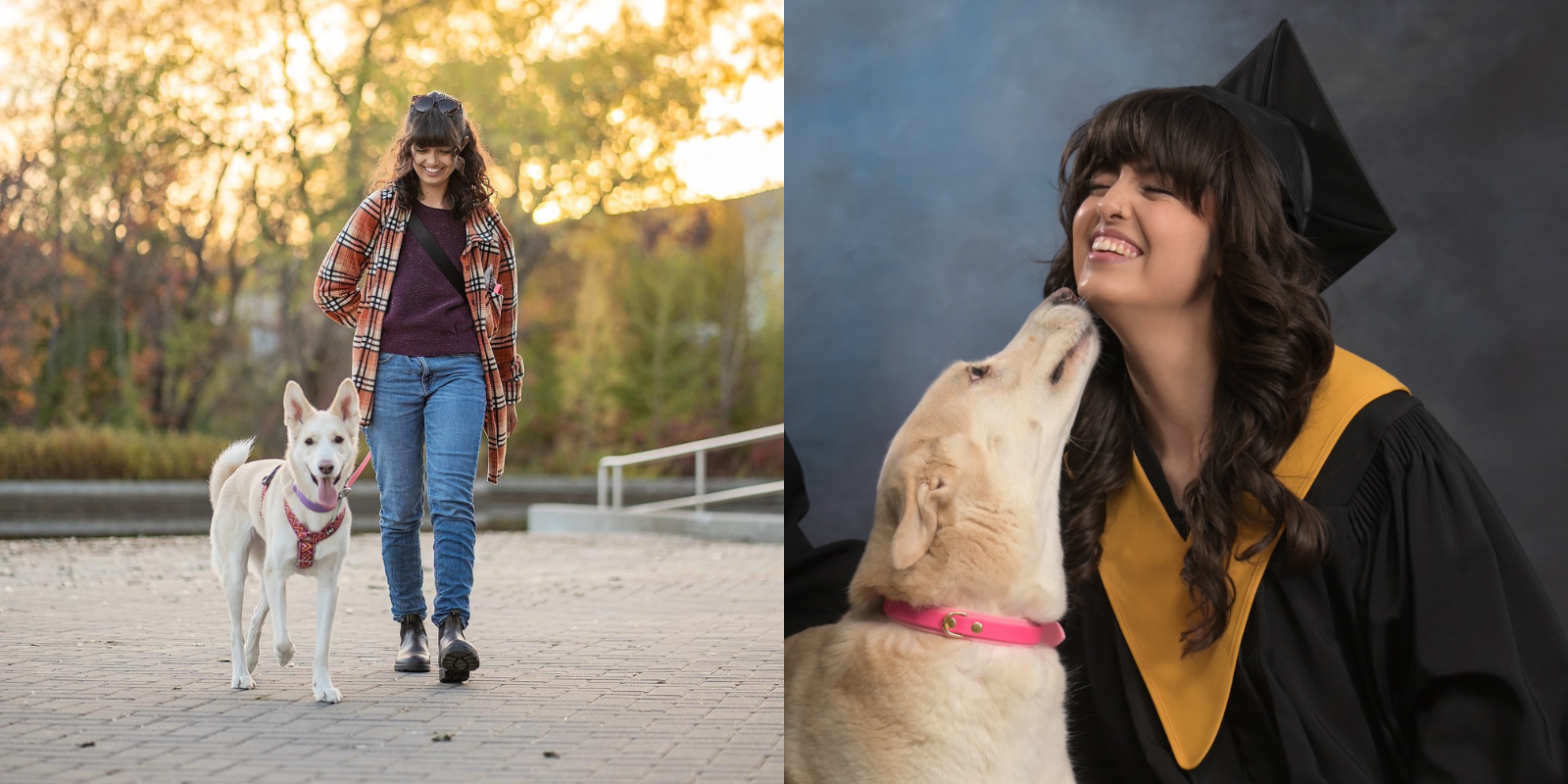
For National Dog Anxiety Awareness Week, certified dog trainer, anxious dog owner, and Furkin member Emily da Mata-Wiens shared her best advice for supporting anxious dogs, because living with one can feel exhausting, isolating, and honestly? A little misunderstood at times.
Read on for Emily’s tips for helping anxious pups feel safer, calmer, and more confident.
1. Learn your dog's stress signals
Not every anxious dog is barking, growling, or acting out. A lot of dogs show quieter signs first, such as:
-
Lip licking
-
Whale eye
-
Freezing
-
Tucked ears or tails
-
Rounded posture
-
Avoidance
Catching these signs early can help prevent your pup from becoming too overwhelmed.
2. Remember: anxiety isn't a choice
According to Emily, anxiety is not your fault, and it’s not your dog’s fault either.
Most anxiety comes from fear. Fear of loud noises, unfamiliar situations, strangers, being approached unexpectedly, and more. Your job isn’t to “fix” your dog overnight. It’s to help them feel safe enough to navigate the world at their own pace.
3. Your dog does not need a busier social calendar than you
Contrary to popular belief, bringing your anxious dog to every patio, pet store, family BBQ, and crowded park is not necessarily exposure therapy.
In fact, Emily says “oversocializing” can make anxiety worse. An anxious brain needs time to slow down and process information in manageable pieces.
Translation: your dog does not need to network.
Instead, focus on calm, positive experiences where your dog can succeed without feeling overwhelmed.
4. Prioritize decompression over perfection
If your dog can’t do a perfect heel but can finally relax enough to sniff a tree for 12 minutes straight, that’s a win.
Emily recommends:
-
Enrichment activities your dog genuinely enjoys
-
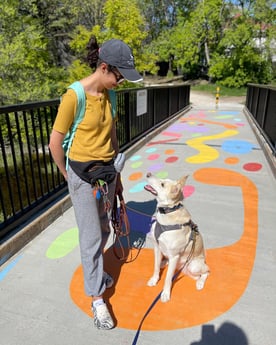
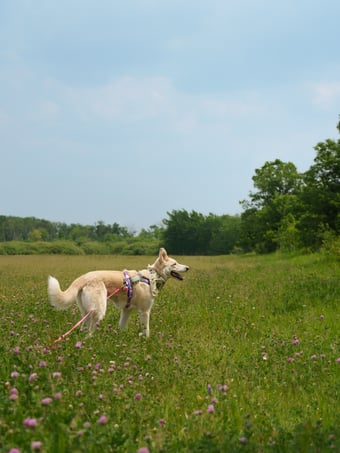
Decompression walks on a long line
-
Opportunities to sniff, explore, and move at their own pace
-
Focusing on emotional regulation over strict obedience
Sometimes the most productive thing you can do is let your dog exist without pressure.
5. Medication isn’t “giving up”
There’s a misconception that medication should only happen as a last resort. Emily strongly disagrees.
She encourages dog owners to build a good relationship with their licensed veterinarian and discuss medication options when appropriate.
Psst...Being able to say "yes" to things like diagnostics and medications is a whole lot easier when you have pet insurance (like Furkin) helping support unexpected vet costs!
6. Celebrate the small wins
Take a moment and appreciate the milestones that other people might not even notice!
Like:
-
Your dog settling calmly while you leave the room
-
Sleeping peacefully during a storm
-
Recovering faster after a stressful moment
-
Looking to you for reassurance instead of panicking
-
Walking past one suspicious garbage bag without incident
These moments matter. A lot. Progress with anxious dogs is rarely linear, but the small wins add up over time. Celebrate every single one of them!
7. Remember: you and your dog are a team
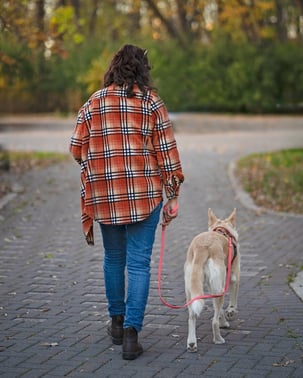
This is probably Emily’s biggest message of all.
So, if you’re out there strategically timing walks, carrying emergency treats like a tactical support system, or proudly texting your group chat that your dog slept through fireworks for the first time ever: we see you. And Emily sees you too.
Living with an anxious dog isn’t always easy. But watching their world slowly grow bigger because they trust you enough to feel safe in it? That’s the kind of win that makes every hard day worth it.
🎥 Watch the 3-part video series featuring Emily and her fur baby, Nova:
Part 1
Part 2
Part 3
Emily da Mata-Wiens is an independent consultant and not an employee with Furkin. For any medical emergency which involves life or limb or inability to breathe, contact your emergency hospital or veterinarian for immediate support.
Frequently Asked Questions
Does Furkin cover behavioural therapy?▶
Yes! If referred by your licensed veterinarian, Furkin will pay for the costs of behavioural modification therapy by a Certified Applied Animal Behaviourist including any eligible medications (diagnosis and treatment for behavioural issues must not exist prior to enrolling or during applicable waiting periods).
However, if treatment is being offered by someone other than a veterinarian, we suggest that you call us if you are unsure whether coverage is available prior to commencing treatment. You can contact our Care Team by phone, email, or chat at www.furkin.com/contact-us.
Does Furkin cover obedience training? ▶
No. Although we cover behavioural therapy, the cost of any obedience classes or non-therapeutic training or therapy are not covered. Correctional devices (e.g. prong collars, head leads, muzzles, shock collars) or preventive products used to address behavioural problems are also not covered.
What does Furkin Pet Insurance cover?
▶
Furkin Pet Insurance provides comprehensive coverage for illnesses (e.g., cancer, diabetes, allergies, etc.), accidents (e.g., hit by a car, broken limb, etc.), and emergencies — the situations you don’t see coming. You can find a complete list of what’s covered – plus our additional perks worth over $3,000 per year – starting on page 11 of our Sample Policy.
Knowing what is not eligible for coverage under your Furkin policy – or any pet insurance policy – is key to making important decisions about your pet's care and helps you avoid confusion about your coverage in the future. Please check out the What’s Not Covered section on Page 16 of Furkin’s sample policy for the complete list and more details.